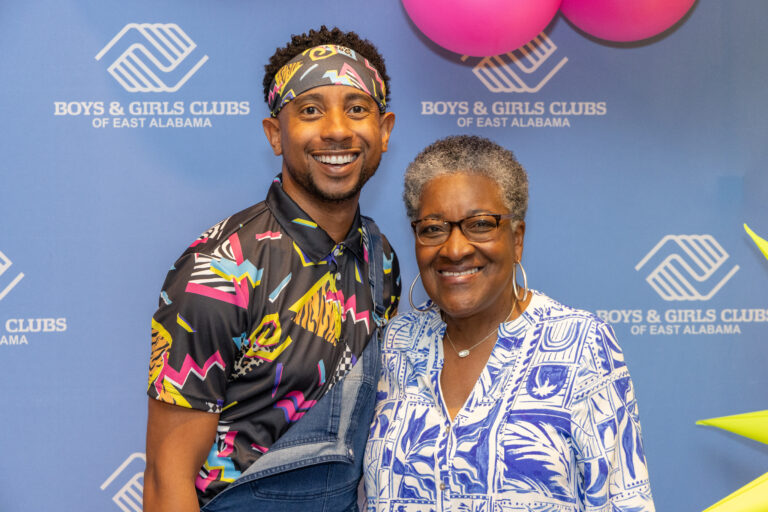
Since 1990, Boys & Girls Clubs of East Alabama, formerly known as Boys & Girls Clubs of Greater Lee County, has been at the forefront of youth development. What began as a grassroots effort to serve young people in Lee County has grown into a regional organization committed to ensuring every child has access to a great future.
In 1989, Mrs. Jane C. Walker led the effort to establish a local Boys & Girls Club organization. Alongside Joan Blackmon, Frances Capps-Palmer, and Tommy Palmer, she mobilized community support around a shared belief that young people in Lee County deserved greater opportunity, guidance, and support.
That vision became reality in June 1990, when the organization was officially chartered by Boys & Girls Clubs of America. Club units opened in Auburn and Opelika, operating out of the Boykin Community Center and the historic Darden High School building. Early investments from community leaders and national partners laid the groundwork for long-term impact, including the development of the Potter-Daniel Unit through a HUD-supported facility project.
By the late 1990s, the organization had grown to serve more than 1,400 youth annually, establishing itself as a trusted and essential resource for families across the community. Over the next two decades, that foundation was strengthened under the steady leadership of Executive Director Wanda Lewis, whose 22 years of service deepened the organization’s roots and expanded its reach.
In 2019, the organization entered a new chapter with the appointment of President & CEO Richard B. Curry, Jr. Building on a strong legacy, Curry introduced a bold strategic vision focused on growth, innovation, and long-term sustainability.
Since that time, the organization has undergone a period of transformational expansion. The operating budget has doubled, and the number of youth served has tripled, significantly increasing access to high-quality programs and experiences.
In 2022, the organization formally rebranded as Boys & Girls Clubs of East Alabama, signaling a clear commitment to regional growth and a broader mission. This shift was not symbolic; it was strategic. It created the foundation for expanding services beyond Lee County and reaching more young people across East Alabama.
That vision quickly translated into action. The organization expanded its footprint by assuming management of the Historic A.G. Gaston Boys & Girls Club in Birmingham and completing a strategic merger with Boys & Girls Clubs of Pike & Surrounding Counties, officially welcoming the City of Troy into its service area.
During the COVID-19 pandemic, the organization demonstrated resilience and purpose. After a brief one-week closure to plan, services resumed with urgency, providing grab and go meals, Club on the Go kits, and childcare for children of first responders. At a time when many programs paused, the organization leaned in.
Innovation has been a defining characteristic of this era. The launch of the first Mobile Clubhouse in the Southeast Region reimagined how services could be delivered, bringing programs directly into communities and removing barriers to access. Today, it stands as a model within the Boys & Girls Club movement and remains the only one of its kind in Alabama.
Internally, the organization strengthened its infrastructure to support sustained growth. Key senior leadership roles were added, and the corporate office transitioned from a shared space into a professional office environment, reflecting both operational maturity and future ambition.
At the same time, the organization invested in modernizing how it connects with families. A comprehensive digital transformation introduced an integrated member management system, a redesigned website, and a mobile app with a virtual clubhouse, creating a more accessible and engaging experience for youth and caregivers.
This period also marked a new level of philanthropic engagement. Signature initiatives like the Great Futures Gala have generated more than one million dollars in support of the mission, while new efforts such as Keys for Kids are expanding the organization’s ability to reach a broader network of supporters and investors.
Looking ahead, the organization is advancing its most ambitious project to date: the development of a 12 acre, state of the art campus designed to serve as a hub for youth and families. This future facility will include early childhood education, mental health and trauma informed care, and a Life and Workforce Development Academy, setting a new standard for what a Boys & Girls Club can be.
Today, Boys & Girls Clubs of East Alabama stands as both a continuation of a powerful legacy and a reflection of what is possible with bold vision and disciplined execution. From its founding to its current trajectory, the organization remains grounded in its mission while continuously evolving to meet the needs of the next generation.
The organization that exists today is not only the result of decades of community commitment, but also a defining period of intentional growth that has reshaped its scale, reach, and future for years to come.